Blab Music
Interpol Guitarist Daniel Kessler Recounts David Bowies Unexpected Backstage Visit at Hammerstein Ballroom
During a recent episode of the Broken Record podcast, Interpol guitarist Daniel Kessler described a brief but memorable encounter with David Bowie that occurred while the band was performing in New York City in the early 2000s.
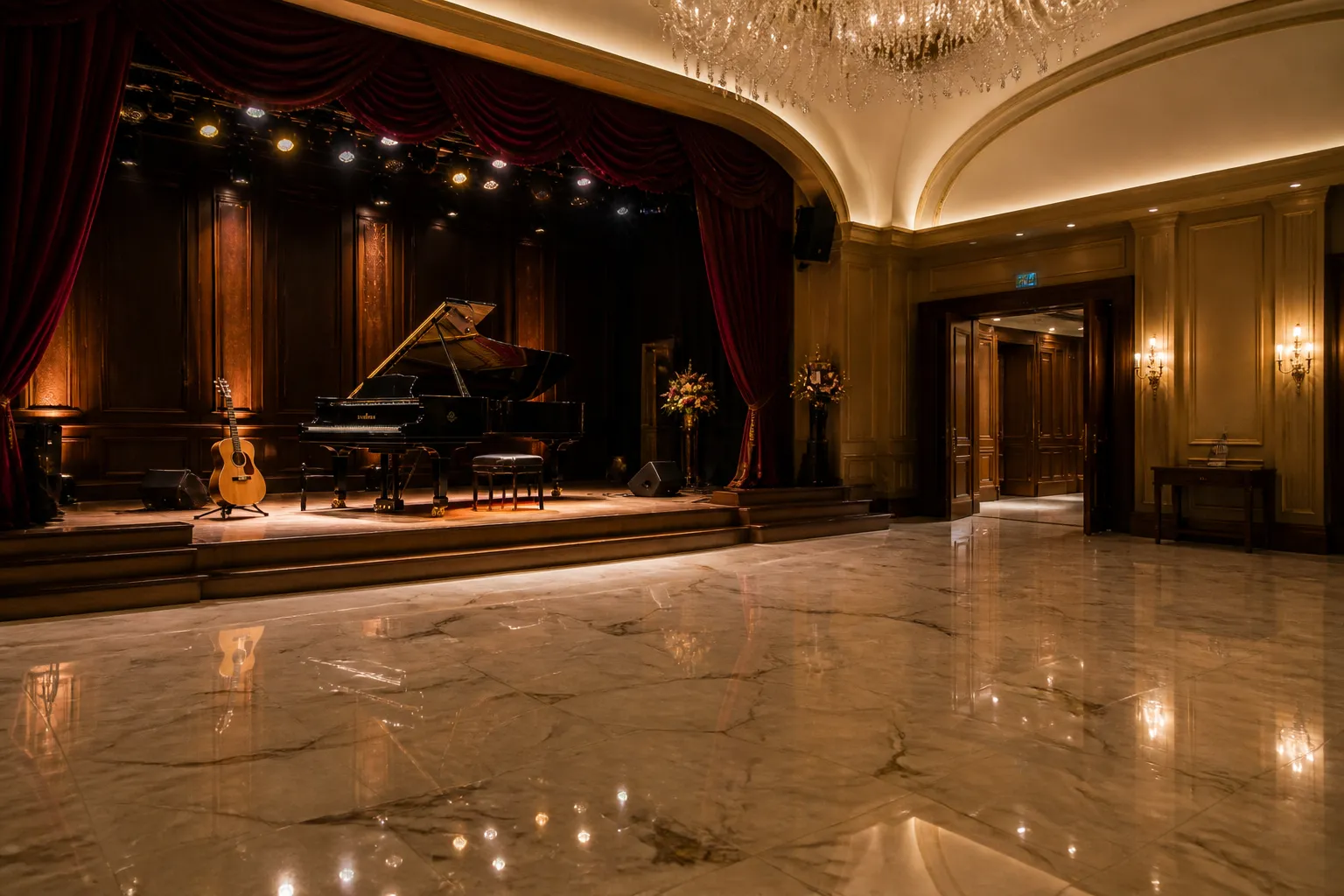
Kessler said the event took place at the Hammerstein Ballroom, a 35,000‑square‑foot venue located inside the Manhattan Center on 34th Street. The band was on a North American tour supporting their debut album Turn On the Bright Lights when the tour manager stopped a visitor at the backstage door. The visitor, who later identified himself as Bowie, was initially denied entry. The tour manager’s response was a simple “Sorry, mate, you can’t come in.” Bowie replied, “But I’m David Bowie.” Once the manager realized the visitor’s identity, Kessler moved aside and allowed the legendary performer inside.
According to Kessler, Bowie was “super affable” and “really kind.” Bowie stopped by before the show because he needed to get home early and would not be able to meet the band afterward. The encounter left the members of Interpol stunned, with Kessler saying, “I don’t think you can do any better,” and adding that Bowie was “one of the great artists of our times.”
The Hammerstein Ballroom has long been a venue for rock and pop acts. In 2002, Interpol’s setlist at the venue included songs from Turn On the Bright Lights and early singles such as “Obstacle 1” and “Panic on the Streets.” The band’s performance that night was part of a tour that helped establish Interpol as a key figure in the post‑punk revival that emerged from New York’s indie scene in the late 1990s.
David Bowie, who passed away in 2016, was known for his frequent reinvention and influence across multiple musical genres. By the early 2000s, Bowie had already released a string of critically acclaimed albums, including The Rise and Fall of Ziggy Stardust and the Spiders from Mars (1972) and Blackstar (2016). His brief appearance at the Hammerstein Ballroom was a spontaneous moment that linked two influential artists from different eras.
The story was first shared by Kessler on the Broken Record podcast, a platform that features interviews with musicians and industry figures. The podcast’s host, who has interviewed a range of artists from Tame Impala to Pharrell Williams, asked Kessler to describe the incident in detail. Kessler’s recollection is consistent with the timeline of Interpol’s 2002 tour and the known schedule of Bowie’s travels during that period.
While the encounter did not lead to a public collaboration or joint performance, it remains a notable anecdote in Interpol’s history. The band’s frontman, Paul Banks, has spoken in past interviews about the influence of Bowie’s work on his songwriting, but no direct interaction beyond this backstage moment has been documented.
The Hammerstein Ballroom continues to host concerts and events, and Interpol remains active in touring. Their most recent album, This Mirror Weighs a Ton, was released in August 2026, and the band is scheduled to perform at several venues across the United States in 2027.
In summary, Daniel Kessler’s account provides a rare glimpse into a backstage encounter that connected a rising post‑punk band with one of the most celebrated artists of the 20th century. The incident, while brief, is remembered by the members of Interpol as a highlight of their early touring years.
Kessler said the event took place at the Hammerstein Ballroom, a 35,000‑square‑foot venue located inside the Manhattan Center on 34th Street. The band was on a North American tour supporting their debut album Turn On the Bright Lights when the tour manager stopped a visitor at the backstage door. The visitor, who later identified himself as Bowie, was initially denied entry. The tour manager’s response was a simple “Sorry, mate, you can’t come in.” Bowie replied, “But I’m David Bowie.” Once the manager realized the visitor’s identity, Kessler moved aside and allowed the legendary performer inside.
According to Kessler, Bowie was “super affable” and “really kind.” Bowie stopped by before the show because he needed to get home early and would not be able to meet the band afterward. The encounter left the members of Interpol stunned, with Kessler saying, “I don’t think you can do any better,” and adding that Bowie was “one of the great artists of our times.”
The Hammerstein Ballroom has long been a venue for rock and pop acts. In 2002, Interpol’s setlist at the venue included songs from Turn On the Bright Lights and early singles such as “Obstacle 1” and “Panic on the Streets.” The band’s performance that night was part of a tour that helped establish Interpol as a key figure in the post‑punk revival that emerged from New York’s indie scene in the late 1990s.
David Bowie, who passed away in 2016, was known for his frequent reinvention and influence across multiple musical genres. By the early 2000s, Bowie had already released a string of critically acclaimed albums, including The Rise and Fall of Ziggy Stardust and the Spiders from Mars (1972) and Blackstar (2016). His brief appearance at the Hammerstein Ballroom was a spontaneous moment that linked two influential artists from different eras.
The story was first shared by Kessler on the Broken Record podcast, a platform that features interviews with musicians and industry figures. The podcast’s host, who has interviewed a range of artists from Tame Impala to Pharrell Williams, asked Kessler to describe the incident in detail. Kessler’s recollection is consistent with the timeline of Interpol’s 2002 tour and the known schedule of Bowie’s travels during that period.
While the encounter did not lead to a public collaboration or joint performance, it remains a notable anecdote in Interpol’s history. The band’s frontman, Paul Banks, has spoken in past interviews about the influence of Bowie’s work on his songwriting, but no direct interaction beyond this backstage moment has been documented.
The Hammerstein Ballroom continues to host concerts and events, and Interpol remains active in touring. Their most recent album, This Mirror Weighs a Ton, was released in August 2026, and the band is scheduled to perform at several venues across the United States in 2027.
In summary, Daniel Kessler’s account provides a rare glimpse into a backstage encounter that connected a rising post‑punk band with one of the most celebrated artists of the 20th century. The incident, while brief, is remembered by the members of Interpol as a highlight of their early touring years.