Blab Music
Google Unveils Major Update to Flow Music Spaces, Adding Song Editing, Stem Splitting, and Video Creation
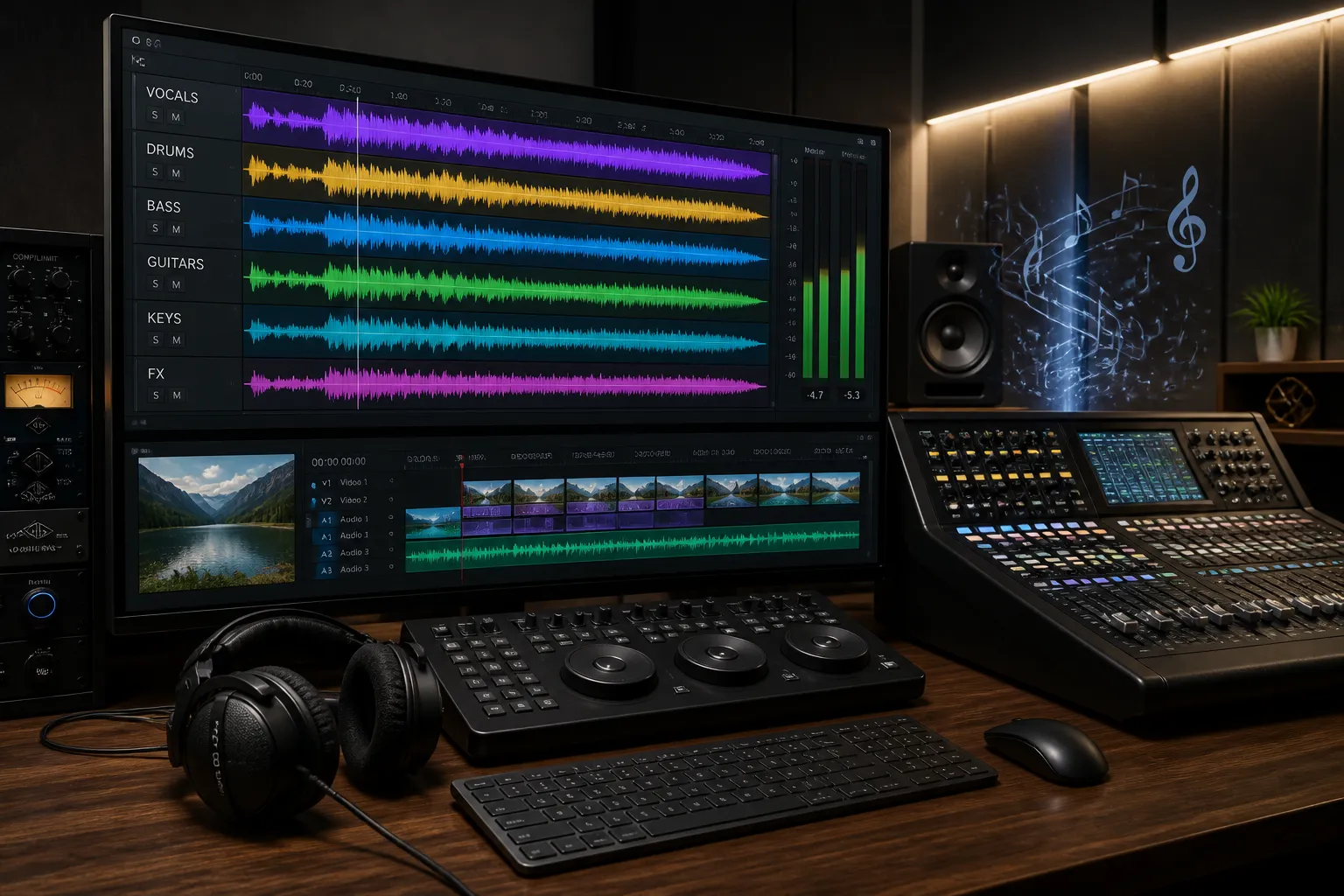
Google announced a comprehensive update to its Flow Music Spaces platform on 29 July 2026. The update expands the AI‑powered workspace so that users can generate, edit, and remix songs, split stems, create album artwork, write lyrics, and produce music videos—all within a single interface. The changes are designed to make Flow Music a more complete tool for musicians, producers and hobbyists, according to the company’s blog post.
The new features are built on several of Google’s generative‑AI models. Song generation and editing use Lyria 3 Pro, DeepMind’s high‑fidelity music‑generation model that can produce tracks up to three minutes long with vocals, instrumentation and lyrics. The platform also incorporates Gemini, Google’s multimodal chat model, to interpret user prompts and guide the creative process. Visual assets are generated with Veo, a video‑generation model, and Nano Banana, an image‑generation model. All AI‑generated outputs are marked with SynthID, a watermark that identifies synthetic content.
Flow Music has evolved from a simple collaboration space into a hub for AI‑assisted music production. The platform’s predecessor, Riffusion, was an open‑source project that gained popularity in 2022 before being rebranded as ProducerAI in 2023. Google acquired the project in February 2023 and integrated it into the Flow suite. Since then, the company has added new features on a monthly basis, aiming to keep the workspace useful for real‑world production workflows.
The update places Flow Music closer to competitors that already offer integrated editing and production tools. Suno Studio launched a similar workspace in September 2025, and Udio released its Sessions workspace in June 2025. Both platforms provide editing, remixing and video creation capabilities. According to reports, Flow Music’s new suite of tools brings it to a comparable level of functionality.
The Lyria 3 Pro model has attracted legal scrutiny. In March 2026, a group of independent musicians filed a lawsuit against Google, alleging that the model was trained on copyrighted recordings from YouTube without permission or payment. Google has responded that it can use content on YouTube for training purposes under the platform’s terms of service and partner agreements. The case is ongoing and has highlighted the broader debate over the use of copyrighted material in training generative AI models.
While Flow Music is not intended to replace professional digital audio workstations, the update makes it a more viable option for producers who need quick, AI‑driven content creation. The platform’s ability to handle multiple media types—audio, video, images and text—within a single workspace reduces the need to switch between separate applications. According to the company, this integration is expected to streamline the creative process for users who are experimenting with AI or who require rapid prototyping of ideas.
The update also reflects Google’s broader strategy to embed AI across its product ecosystem. The company has been expanding its generative‑AI portfolio with models such as Gemini, Veo and Nano Banana, and has integrated them into consumer‑facing services like Google Photos and YouTube. Flow Music’s new capabilities demonstrate how the company is applying these models to niche creative domains.
Industry observers note that the addition of stem‑splitting and video‑generation features could influence how artists produce content for social media platforms. By allowing users to isolate vocals or instruments, Flow Music can help creators tailor tracks for remix culture or for use in short‑form video formats. The platform’s video‑generation tool, which can produce up to ten‑second clips with native audio, aligns with the growing demand for AI‑generated visual content.
The lawsuit over Lyria 3 Pro remains unresolved, and its outcome could affect how Google and other companies train music‑generation models in the future. Meanwhile, Flow Music continues to roll out incremental improvements, and the company has indicated plans to expand its library of pre‑built instruments and effects in the coming months.
In summary, Google’s latest Flow Music Spaces update adds comprehensive song editing, stem splitting, image and lyric generation, and video creation to the platform. Built on Lyria 3 Pro, Gemini, Veo and Nano Banana, the workspace now offers a more complete set of tools for musicians and producers. The update brings Flow Music closer to competitors like Suno Studio and Udio, while the ongoing lawsuit over Lyria 3 Pro’s training data underscores the regulatory challenges facing AI‑generated music.
The new features are built on several of Google’s generative‑AI models. Song generation and editing use Lyria 3 Pro, DeepMind’s high‑fidelity music‑generation model that can produce tracks up to three minutes long with vocals, instrumentation and lyrics. The platform also incorporates Gemini, Google’s multimodal chat model, to interpret user prompts and guide the creative process. Visual assets are generated with Veo, a video‑generation model, and Nano Banana, an image‑generation model. All AI‑generated outputs are marked with SynthID, a watermark that identifies synthetic content.
Flow Music has evolved from a simple collaboration space into a hub for AI‑assisted music production. The platform’s predecessor, Riffusion, was an open‑source project that gained popularity in 2022 before being rebranded as ProducerAI in 2023. Google acquired the project in February 2023 and integrated it into the Flow suite. Since then, the company has added new features on a monthly basis, aiming to keep the workspace useful for real‑world production workflows.
The update places Flow Music closer to competitors that already offer integrated editing and production tools. Suno Studio launched a similar workspace in September 2025, and Udio released its Sessions workspace in June 2025. Both platforms provide editing, remixing and video creation capabilities. According to reports, Flow Music’s new suite of tools brings it to a comparable level of functionality.
The Lyria 3 Pro model has attracted legal scrutiny. In March 2026, a group of independent musicians filed a lawsuit against Google, alleging that the model was trained on copyrighted recordings from YouTube without permission or payment. Google has responded that it can use content on YouTube for training purposes under the platform’s terms of service and partner agreements. The case is ongoing and has highlighted the broader debate over the use of copyrighted material in training generative AI models.
While Flow Music is not intended to replace professional digital audio workstations, the update makes it a more viable option for producers who need quick, AI‑driven content creation. The platform’s ability to handle multiple media types—audio, video, images and text—within a single workspace reduces the need to switch between separate applications. According to the company, this integration is expected to streamline the creative process for users who are experimenting with AI or who require rapid prototyping of ideas.
The update also reflects Google’s broader strategy to embed AI across its product ecosystem. The company has been expanding its generative‑AI portfolio with models such as Gemini, Veo and Nano Banana, and has integrated them into consumer‑facing services like Google Photos and YouTube. Flow Music’s new capabilities demonstrate how the company is applying these models to niche creative domains.
Industry observers note that the addition of stem‑splitting and video‑generation features could influence how artists produce content for social media platforms. By allowing users to isolate vocals or instruments, Flow Music can help creators tailor tracks for remix culture or for use in short‑form video formats. The platform’s video‑generation tool, which can produce up to ten‑second clips with native audio, aligns with the growing demand for AI‑generated visual content.
The lawsuit over Lyria 3 Pro remains unresolved, and its outcome could affect how Google and other companies train music‑generation models in the future. Meanwhile, Flow Music continues to roll out incremental improvements, and the company has indicated plans to expand its library of pre‑built instruments and effects in the coming months.
In summary, Google’s latest Flow Music Spaces update adds comprehensive song editing, stem splitting, image and lyric generation, and video creation to the platform. Built on Lyria 3 Pro, Gemini, Veo and Nano Banana, the workspace now offers a more complete set of tools for musicians and producers. The update brings Flow Music closer to competitors like Suno Studio and Udio, while the ongoing lawsuit over Lyria 3 Pro’s training data underscores the regulatory challenges facing AI‑generated music.