Blab Music
FIFA World Cup 2026 Final Introduces First-Ever Halftime Show, Featuring Madonna, BTS, Shakira, and More
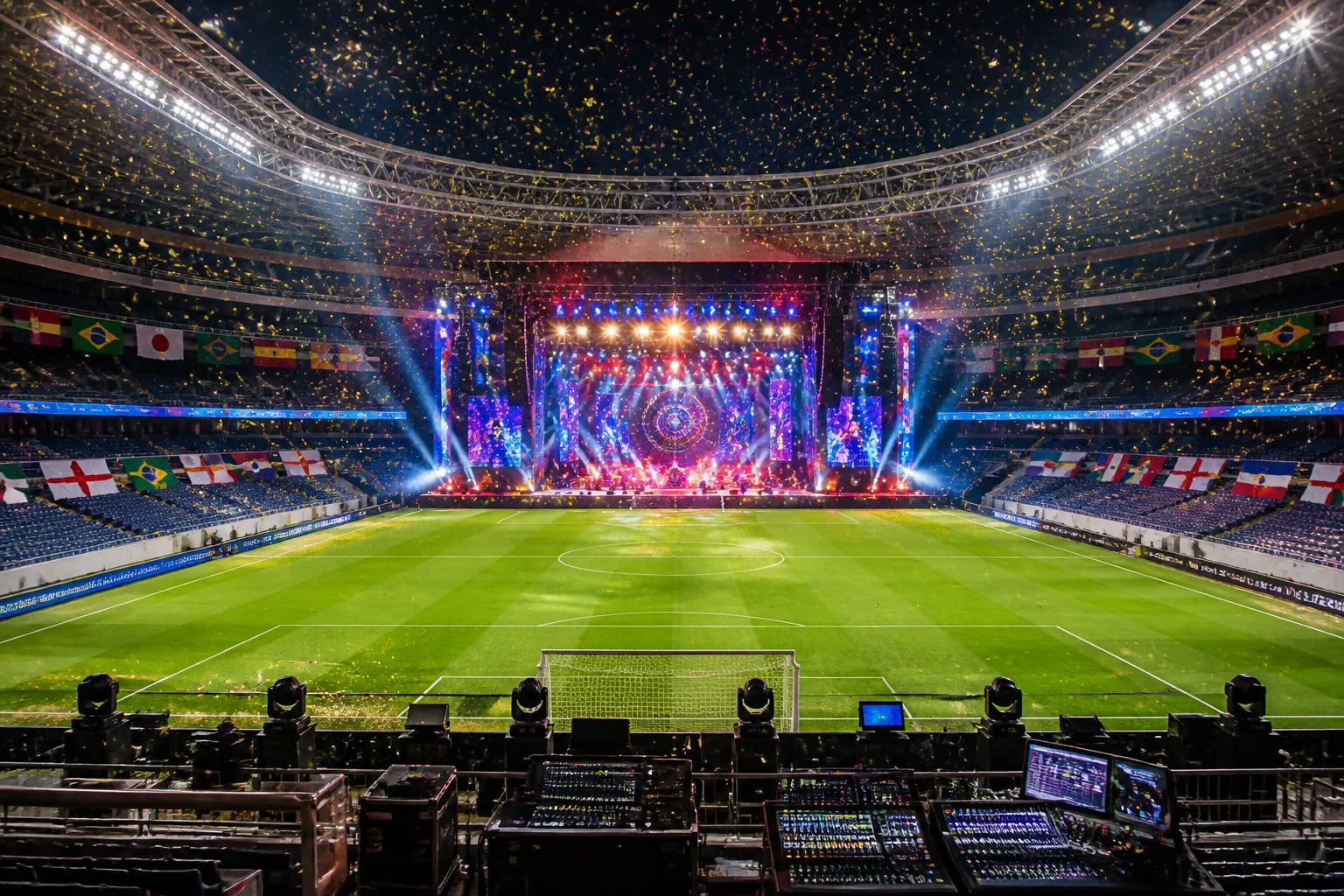
At the 2026 FIFA World Cup final, the roar of 80,663 fans in East Rutherford’s MetLife Stadium was interrupted not by a goal, but by a glittering spectacle that will become a new benchmark for sporting entertainment. For the first time ever, the World Cup final hosted an official halftime show—an 11‑minute, multi‑artist affair curated by Coldplay front‑man Chris Martin that turned the pause between halves into a global music festival.
The show opened with a pre‑taped montage from Madonna that paired her hit “Music” with former football legends Ronaldinho and Ronaldo Nazário. The clip showed the two icons being whisked away in a Jeep toward the field, injecting a playful energy that set the tone for the live performance. From there, conductor Gustavo Dudamel led a string ensemble that blended musicians from New York, Venezuela, and a Muppet band in a rendition of the White Stripes’ “Seven Nation Army.” The fusion of orchestral and pop elements created a dynamic backdrop for the next act.
BTS followed with a high‑energy rendition of “Dynamite,” a two‑minute burst that kept the stadium lights flashing. In stark contrast, Justin Bieber delivered an acoustic version of “Everything Hallelujah” from his 2025 album Swag II. Stripped of backing tracks and laptops, the performance stood out for its raw emotional resonance amid the larger spectacle.
The finale of the halftime show saw Shakira and Burna Boy perform the official 2026 FIFA anthem, “Dai Dai.” Their set featured child dancers, women of diverse nationalities, and a cameo by the Muppets, underscoring the tournament’s message of unity. The segment closed with the PS22 Chorus and Chris Martin singing “We Believe in Love,” after which a giant globe bearing the word “LOVE” appeared on the stadium’s LED wall.
While the music spanned just 11 minutes, the official halftime break stretched over 27 minutes—well beyond the International Football Association Board’s (IFAB) standard duration. Officials cited the logistical demands of staging the multi‑artist show as the reason for the extended pause.
The pre‑game show was equally star‑studded. Post Malone and Swae Lee performed “Sunflower,” Jennifer Hudson delivered a rendition of the U.S. national anthem, and a trio of former FIFA theme performers—Robbie Williams, Nicole Scherzinger, and Laura Pausini—took the stage to sing “Desire.”
The atmosphere outside the stadium was as electric as the inside. Celebrities such as The Weeknd, Jay‑Z, Beyoncé, Mick Jagger, Pharrell Williams, Timothée Chalamet, and Kylie Jenner mingled with the crowd, while political figures—including Mexican President Claudia Sheinbaum Pardo, Canadian Prime Minister Mark Carney, and former U.S. President Donald Trump—stood in the stands.
FIFA’s decision to introduce a halftime show was part of a broader strategy to fuse music and sport on a global stage. According to the federation’s March 5, 2025 announcement, the show was co‑produced with Global Citizen and designed to showcase cultural diversity and unity. FIFA described the performance as a “half‑time show like no other,” signaling a willingness to experiment with the traditional format.
On the pitch, Spain edged Argentina 1‑0 after extra time, with Ferran Torres scoring the decisive goal. The match, held before 80,663 spectators, became the first World Cup final to feature a halftime show, setting a new precedent for future tournaments.
The success of the halftime spectacle may influence how World Cup finals and other major sporting events integrate music performances. FIFA’s willingness to expand the halftime break and assemble a diverse lineup demonstrates a readiness to reshape audience expectations for the sport’s biggest stage. As the tournament concludes, stakeholders—including FIFA, broadcasters, and fans—will scrutinize the format’s impact on future planning, licensing agreements, and cross‑industry collaborations. The event has already sparked conversation about the role of entertainment in international sport, and its long‑term effects remain to be seen.
The show opened with a pre‑taped montage from Madonna that paired her hit “Music” with former football legends Ronaldinho and Ronaldo Nazário. The clip showed the two icons being whisked away in a Jeep toward the field, injecting a playful energy that set the tone for the live performance. From there, conductor Gustavo Dudamel led a string ensemble that blended musicians from New York, Venezuela, and a Muppet band in a rendition of the White Stripes’ “Seven Nation Army.” The fusion of orchestral and pop elements created a dynamic backdrop for the next act.
BTS followed with a high‑energy rendition of “Dynamite,” a two‑minute burst that kept the stadium lights flashing. In stark contrast, Justin Bieber delivered an acoustic version of “Everything Hallelujah” from his 2025 album Swag II. Stripped of backing tracks and laptops, the performance stood out for its raw emotional resonance amid the larger spectacle.
The finale of the halftime show saw Shakira and Burna Boy perform the official 2026 FIFA anthem, “Dai Dai.” Their set featured child dancers, women of diverse nationalities, and a cameo by the Muppets, underscoring the tournament’s message of unity. The segment closed with the PS22 Chorus and Chris Martin singing “We Believe in Love,” after which a giant globe bearing the word “LOVE” appeared on the stadium’s LED wall.
While the music spanned just 11 minutes, the official halftime break stretched over 27 minutes—well beyond the International Football Association Board’s (IFAB) standard duration. Officials cited the logistical demands of staging the multi‑artist show as the reason for the extended pause.
The pre‑game show was equally star‑studded. Post Malone and Swae Lee performed “Sunflower,” Jennifer Hudson delivered a rendition of the U.S. national anthem, and a trio of former FIFA theme performers—Robbie Williams, Nicole Scherzinger, and Laura Pausini—took the stage to sing “Desire.”
The atmosphere outside the stadium was as electric as the inside. Celebrities such as The Weeknd, Jay‑Z, Beyoncé, Mick Jagger, Pharrell Williams, Timothée Chalamet, and Kylie Jenner mingled with the crowd, while political figures—including Mexican President Claudia Sheinbaum Pardo, Canadian Prime Minister Mark Carney, and former U.S. President Donald Trump—stood in the stands.
FIFA’s decision to introduce a halftime show was part of a broader strategy to fuse music and sport on a global stage. According to the federation’s March 5, 2025 announcement, the show was co‑produced with Global Citizen and designed to showcase cultural diversity and unity. FIFA described the performance as a “half‑time show like no other,” signaling a willingness to experiment with the traditional format.
On the pitch, Spain edged Argentina 1‑0 after extra time, with Ferran Torres scoring the decisive goal. The match, held before 80,663 spectators, became the first World Cup final to feature a halftime show, setting a new precedent for future tournaments.
The success of the halftime spectacle may influence how World Cup finals and other major sporting events integrate music performances. FIFA’s willingness to expand the halftime break and assemble a diverse lineup demonstrates a readiness to reshape audience expectations for the sport’s biggest stage. As the tournament concludes, stakeholders—including FIFA, broadcasters, and fans—will scrutinize the format’s impact on future planning, licensing agreements, and cross‑industry collaborations. The event has already sparked conversation about the role of entertainment in international sport, and its long‑term effects remain to be seen.