Blab Music
Doc Wileys Custom Strat-o-Bass Turns a Fender Precision into a One-Instrument Workhorse
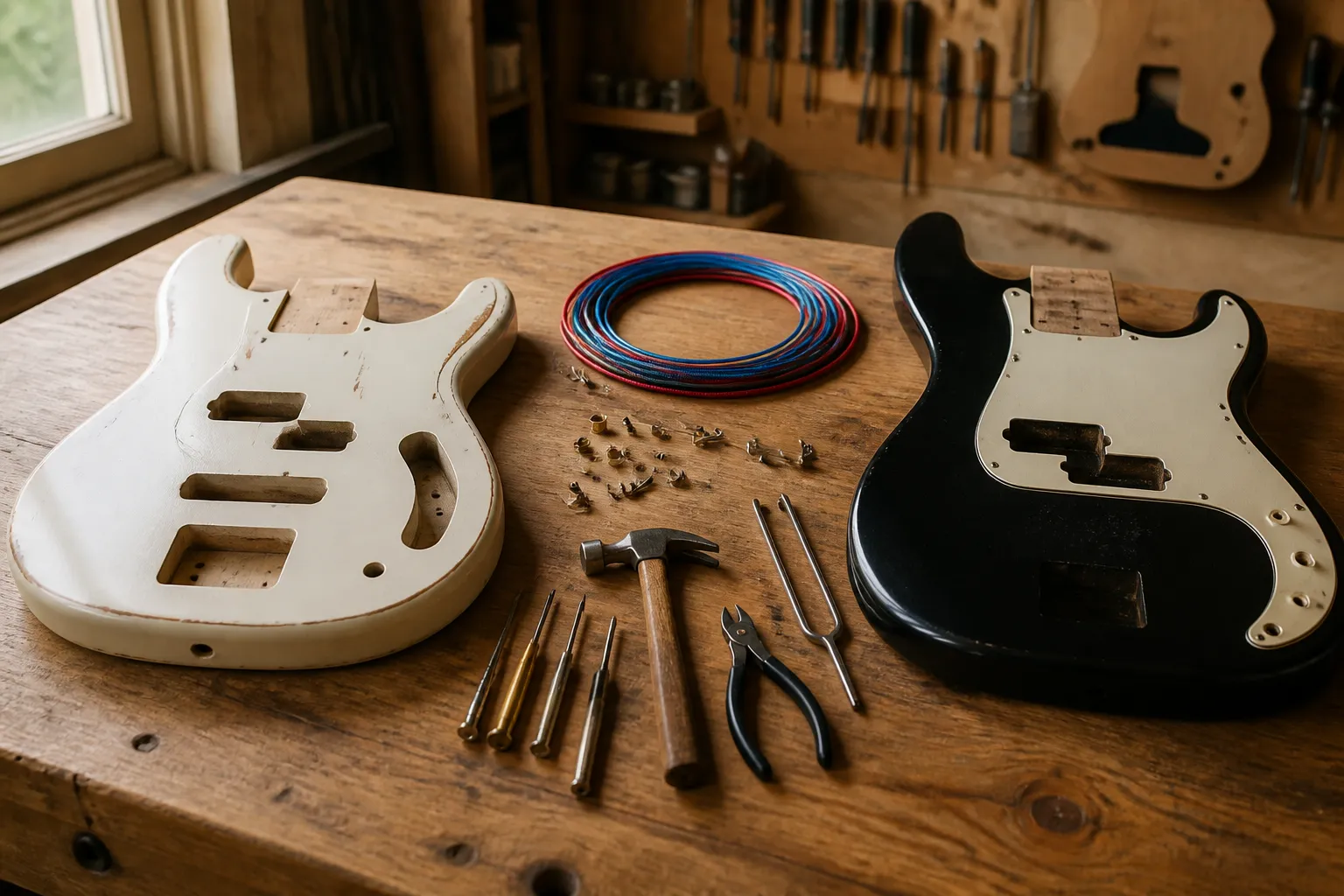
Doc Wiley, a Grammy‑winning mix engineer and touring bassist, has turned a standard Fender Precision Bass into a custom four‑string workhorse he calls the Doc Shop Strat‑o‑Bass. The instrument was built by luthier Bill Foley of German Village Music Haus in Columbus, Ohio, and was designed to meet the demands of Wiley’s long‑running Tom Petty tribute band, The Waiting.
Wiley began playing with The Waiting in 2013, a band that performs the entire Tom Petty and the Heartbreakers catalog. Because the set list requires frequent guitar changes, Wiley wanted a single bass that could cover all the low‑end parts without adding extra changeover time. "One bass to rule them all," he writes on his Substack.
The build starts with the classic Precision body and a 34‑inch scale. The neck is maple with a modern “C” profile, and the fingerboard is Indian laurel with a 9.5‑inch radius. The instrument has 20 medium‑jumbo frets that have been leveled, crowned, and polished to 12,000. Position markers are Luminlay illuminated side dots and a custom Luminlay bullseye.
Pickup selection was a key part of the design. Wiley consulted pickup specialist Larry DiMarzio and chose three DiMarzio Relentless Neck DP295 bass pickups. A five‑way selector switch and a custom G&L‑inspired master tone control give the player a wide tonal palette. A push/pull function on the middle pickup routes the signal through a .0047 µF capacitor, producing a focused, vintage Rickenbacker‑inspired response when the tone knob is pulled.
Hardware upgrades complement the tonal changes. The bass uses Leo Quan tuning machines and a Badass III high‑mass bridge, a retrofit that improves sustain, attack, and note clarity. The bridge is string‑through‑body, and the instrument is fitted with a custom ebony thumb guide between the neck and middle pickups.
One of the most distinctive features is the stepped resonant chamber in the rear of the body. The chamber consists of three rounded, concentric cavities that are proportioned to the fundamental, major third, and fifth of a musical note. According to Wiley, the resonator encourages consonant resonance throughout the instrument and gives the bass a sustained, almost “unfinished business” sound.
Wiley documented the entire process on his Substack, publishing two parts that detail the design decisions, wiring tricks, and construction steps. He emphasizes that the goal is not to own a custom instrument for its own sake, but to own a bass that helps musicians make music. "The right upgrades can make a mid‑priced bass feel like home," he writes.
The finished Strat‑o‑Bass has been used in recent performances with The Waiting, allowing Wiley to maintain a consistent low‑end presence while the band’s guitarists switch between multiple guitars. The instrument’s versatility and robust construction make it suitable for touring and live shows.
Bill Foley’s role as luthier was pivotal. He not only built the custom body and neck but also added a wiring trick that allows the middle pickup to emulate a Rickenbacker 4001‑style tone when the tone knob is pulled. Foley’s craftsmanship and willingness to experiment with unconventional ideas helped bring Wiley’s vision to life.
The Doc Shop Strat‑o‑Bass demonstrates how modern bassists can blend classic hardware with contemporary electronics to create a single instrument that meets the demands of complex live sets. By combining a Precision foundation with DiMarzio pickups, G&L‑style circuitry, Leo Quan hardware, and a resonant chamber, Wiley has produced a bass that is both practical and sonically rich.
The instrument is currently in use by Wiley and is available for viewing on his Substack. Fans of custom bass builds and Tom Petty tribute bands can follow the project’s progress through Wiley’s posts and the German Village Music Haus website.
In summary, Doc Wiley’s Strat‑o‑Bass is a testament to thoughtful customization: a Precision base, DiMarzio pickups, G&L tone circuitry, Leo Quan tuning and bridge, and a resonant chamber all combine to create a bass that supports a full Tom Petty set without the need for multiple instruments.
Wiley began playing with The Waiting in 2013, a band that performs the entire Tom Petty and the Heartbreakers catalog. Because the set list requires frequent guitar changes, Wiley wanted a single bass that could cover all the low‑end parts without adding extra changeover time. "One bass to rule them all," he writes on his Substack.
The build starts with the classic Precision body and a 34‑inch scale. The neck is maple with a modern “C” profile, and the fingerboard is Indian laurel with a 9.5‑inch radius. The instrument has 20 medium‑jumbo frets that have been leveled, crowned, and polished to 12,000. Position markers are Luminlay illuminated side dots and a custom Luminlay bullseye.
Pickup selection was a key part of the design. Wiley consulted pickup specialist Larry DiMarzio and chose three DiMarzio Relentless Neck DP295 bass pickups. A five‑way selector switch and a custom G&L‑inspired master tone control give the player a wide tonal palette. A push/pull function on the middle pickup routes the signal through a .0047 µF capacitor, producing a focused, vintage Rickenbacker‑inspired response when the tone knob is pulled.
Hardware upgrades complement the tonal changes. The bass uses Leo Quan tuning machines and a Badass III high‑mass bridge, a retrofit that improves sustain, attack, and note clarity. The bridge is string‑through‑body, and the instrument is fitted with a custom ebony thumb guide between the neck and middle pickups.
One of the most distinctive features is the stepped resonant chamber in the rear of the body. The chamber consists of three rounded, concentric cavities that are proportioned to the fundamental, major third, and fifth of a musical note. According to Wiley, the resonator encourages consonant resonance throughout the instrument and gives the bass a sustained, almost “unfinished business” sound.
Wiley documented the entire process on his Substack, publishing two parts that detail the design decisions, wiring tricks, and construction steps. He emphasizes that the goal is not to own a custom instrument for its own sake, but to own a bass that helps musicians make music. "The right upgrades can make a mid‑priced bass feel like home," he writes.
The finished Strat‑o‑Bass has been used in recent performances with The Waiting, allowing Wiley to maintain a consistent low‑end presence while the band’s guitarists switch between multiple guitars. The instrument’s versatility and robust construction make it suitable for touring and live shows.
Bill Foley’s role as luthier was pivotal. He not only built the custom body and neck but also added a wiring trick that allows the middle pickup to emulate a Rickenbacker 4001‑style tone when the tone knob is pulled. Foley’s craftsmanship and willingness to experiment with unconventional ideas helped bring Wiley’s vision to life.
The Doc Shop Strat‑o‑Bass demonstrates how modern bassists can blend classic hardware with contemporary electronics to create a single instrument that meets the demands of complex live sets. By combining a Precision foundation with DiMarzio pickups, G&L‑style circuitry, Leo Quan hardware, and a resonant chamber, Wiley has produced a bass that is both practical and sonically rich.
The instrument is currently in use by Wiley and is available for viewing on his Substack. Fans of custom bass builds and Tom Petty tribute bands can follow the project’s progress through Wiley’s posts and the German Village Music Haus website.
In summary, Doc Wiley’s Strat‑o‑Bass is a testament to thoughtful customization: a Precision base, DiMarzio pickups, G&L tone circuitry, Leo Quan tuning and bridge, and a resonant chamber all combine to create a bass that supports a full Tom Petty set without the need for multiple instruments.