Blab Music
R. Kelly Seeks Sentence Commutation, While SoundPatrol Expands AI-Driven Copyright Enforcement
In a move that has drawn attention from legal analysts and music‑industry watchdogs, former R&B star R. Kelly has formally requested that President Donald Trump commute his 30‑year federal sentence. The request, filed with the Department of Justice, is a petition for commutation rather than a pardon. The White House has said it is not tracking the request, noting that the president remains the ultimate decision‑maker.
Kelly, who was convicted in 2022 on multiple counts of sexual abuse and related offenses, has been serving his sentence at FCC Butner Medium‑I in North Carolina since 2025. The petition was announced on July 17, 2026, and appears on the DOJ’s public docket. According to the filing, Kelly seeks a reduction in his term, citing health concerns and the passage of time. The request was not accompanied by a formal appeal of the convictions.
The White House has publicly stated that it does not routinely follow up on individual commutation requests, and that any decision would be made at the president’s discretion. The request is part of a broader pattern of high‑profile individuals seeking clemency from the Trump administration, which has granted more than 1,700 executive clemencies since taking office in 2025.
Meanwhile, the music‑technology sector is seeing a new development in the form of SoundPatrol, a neural enforcement engine designed to detect unlicensed activity and copyright infringement in music, including works generated by artificial intelligence. SoundPatrol’s website describes the system as a large‑scale, 24/7 surveillance platform that uses neural fingerprinting to identify copyrighted material in audio streams.
In a recent partnership announcement, SoundPatrol revealed that Universal Music Group and Sony Music Entertainment have agreed to use the platform’s “groundbreaking neural fingerprinting technologies” to monitor AI‑generated music for infringement. The collaboration, which was publicized on LinkedIn in early 2026, indicates that major labels are investing in tools that can automatically flag potential violations in real time.
SoundPatrol’s technology relies on a GPU‑clustered neural network that processes audio data and compares it against a proprietary database of copyrighted works. The system is AI‑native, meaning it can handle the high‑volume, high‑frequency demands of streaming services and large‑scale music‑generation platforms. According to the company’s press release, the platform has already been deployed in pilot projects with streaming services to detect unlicensed samples and to enforce licensing agreements.
Industry observers note that the emergence of AI‑generated music has created new challenges for copyright enforcement. Traditional sampling detection tools are often ill‑suited to the subtle transformations that AI can apply to source material. SoundPatrol’s neural fingerprinting approach seeks to address this gap by providing a more flexible, adaptive method of identifying infringing content.
The partnership with UMG and Sony also signals a shift in how record labels are approaching AI‑related risks. While some artists and producers have embraced AI tools for composition and production, the legal landscape remains uncertain. By investing in enforcement technology, labels aim to protect their catalogues while still allowing for legitimate creative use of AI.
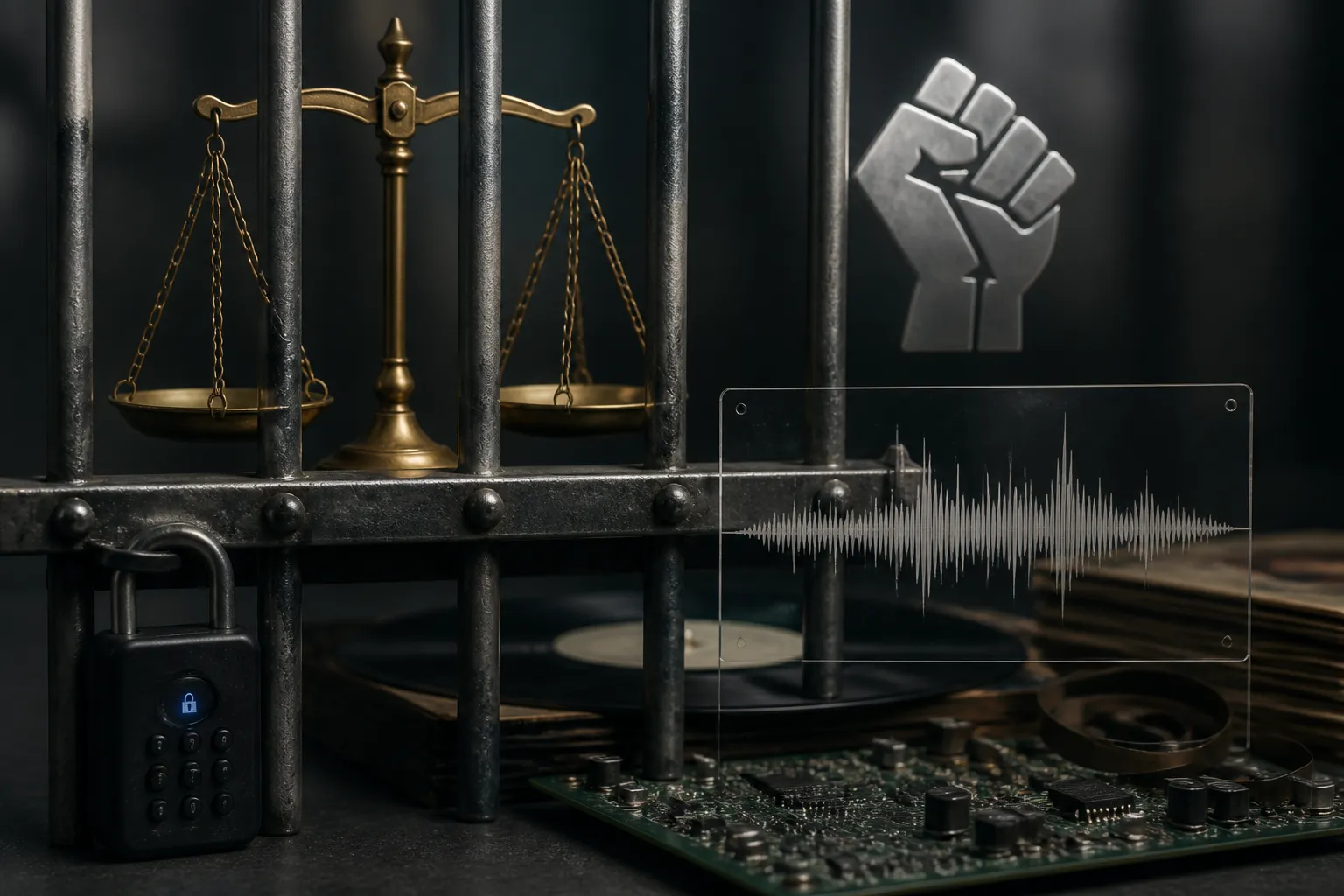
The two stories—Kelly’s commutation request and SoundPatrol’s AI‑enforcement rollout—highlight the intersection of legal, technological, and commercial forces shaping the contemporary music industry. On the one hand, the legal system is grappling with how to apply traditional clemency mechanisms to high‑profile cases. On the other, the industry is developing new technical solutions to safeguard intellectual property in an era where AI can generate music at scale.
As the Trump administration continues to review clemency petitions, and as SoundPatrol expands its reach across major labels, the music world will be watching closely. The outcomes of these developments could set precedents for how the industry handles both criminal justice matters involving artists and the evolving challenges of AI‑generated content.
Kelly, who was convicted in 2022 on multiple counts of sexual abuse and related offenses, has been serving his sentence at FCC Butner Medium‑I in North Carolina since 2025. The petition was announced on July 17, 2026, and appears on the DOJ’s public docket. According to the filing, Kelly seeks a reduction in his term, citing health concerns and the passage of time. The request was not accompanied by a formal appeal of the convictions.
The White House has publicly stated that it does not routinely follow up on individual commutation requests, and that any decision would be made at the president’s discretion. The request is part of a broader pattern of high‑profile individuals seeking clemency from the Trump administration, which has granted more than 1,700 executive clemencies since taking office in 2025.
Meanwhile, the music‑technology sector is seeing a new development in the form of SoundPatrol, a neural enforcement engine designed to detect unlicensed activity and copyright infringement in music, including works generated by artificial intelligence. SoundPatrol’s website describes the system as a large‑scale, 24/7 surveillance platform that uses neural fingerprinting to identify copyrighted material in audio streams.
In a recent partnership announcement, SoundPatrol revealed that Universal Music Group and Sony Music Entertainment have agreed to use the platform’s “groundbreaking neural fingerprinting technologies” to monitor AI‑generated music for infringement. The collaboration, which was publicized on LinkedIn in early 2026, indicates that major labels are investing in tools that can automatically flag potential violations in real time.
SoundPatrol’s technology relies on a GPU‑clustered neural network that processes audio data and compares it against a proprietary database of copyrighted works. The system is AI‑native, meaning it can handle the high‑volume, high‑frequency demands of streaming services and large‑scale music‑generation platforms. According to the company’s press release, the platform has already been deployed in pilot projects with streaming services to detect unlicensed samples and to enforce licensing agreements.
Industry observers note that the emergence of AI‑generated music has created new challenges for copyright enforcement. Traditional sampling detection tools are often ill‑suited to the subtle transformations that AI can apply to source material. SoundPatrol’s neural fingerprinting approach seeks to address this gap by providing a more flexible, adaptive method of identifying infringing content.
The partnership with UMG and Sony also signals a shift in how record labels are approaching AI‑related risks. While some artists and producers have embraced AI tools for composition and production, the legal landscape remains uncertain. By investing in enforcement technology, labels aim to protect their catalogues while still allowing for legitimate creative use of AI.
The two stories—Kelly’s commutation request and SoundPatrol’s AI‑enforcement rollout—highlight the intersection of legal, technological, and commercial forces shaping the contemporary music industry. On the one hand, the legal system is grappling with how to apply traditional clemency mechanisms to high‑profile cases. On the other, the industry is developing new technical solutions to safeguard intellectual property in an era where AI can generate music at scale.
As the Trump administration continues to review clemency petitions, and as SoundPatrol expands its reach across major labels, the music world will be watching closely. The outcomes of these developments could set precedents for how the industry handles both criminal justice matters involving artists and the evolving challenges of AI‑generated content.