Blab Music
Bob Moog Foundation Adds Rare 1954 Model 351 Theremin to Asheville Archive
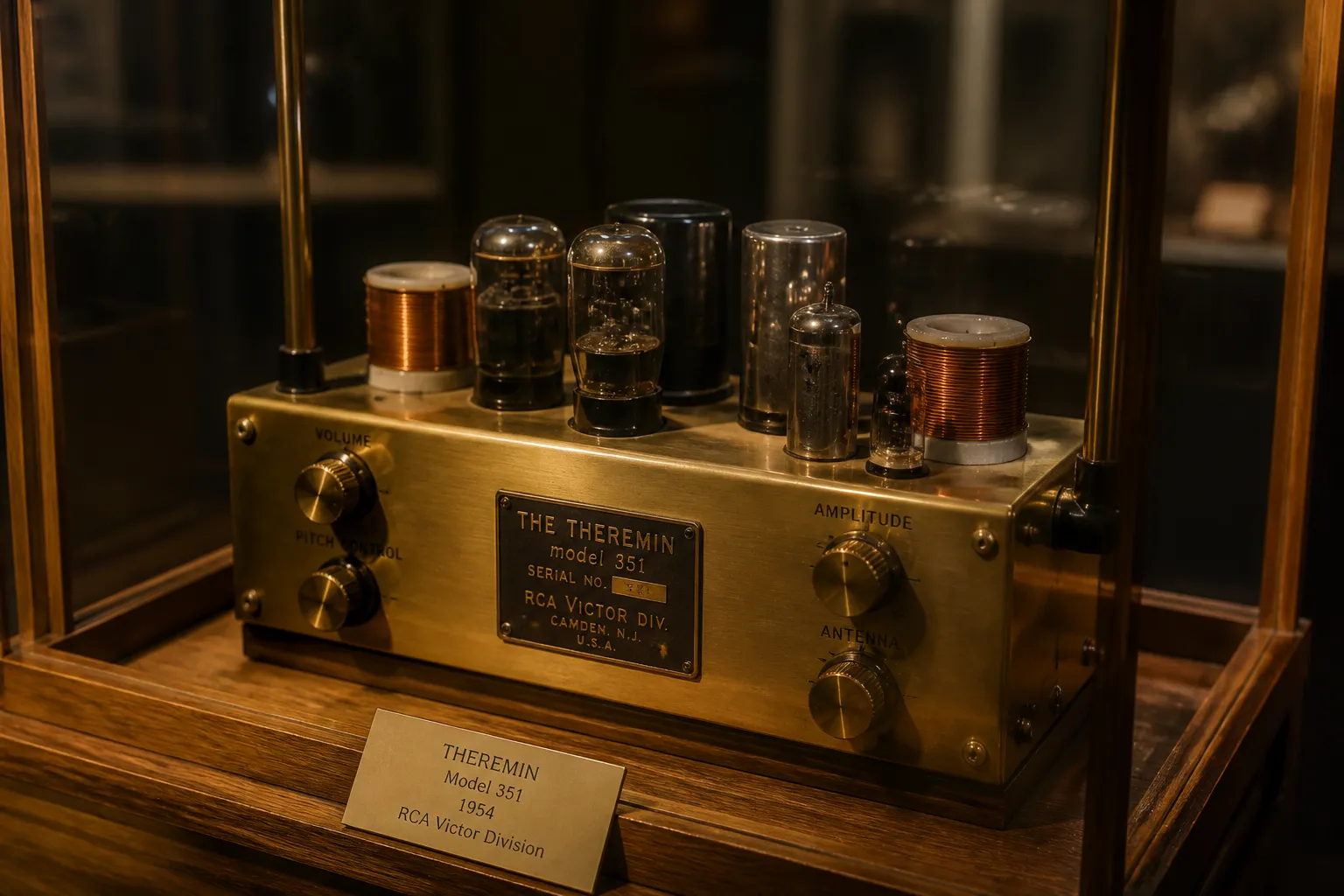
A 1954 R.A. Moog Model 351 theremin—an instrument born when electronic music was still in its infancy—has joined the Bob Moog Foundation’s Asheville archive. The donation, made by Tammy and Phil Niemeyer, adds a piece of the company’s formative years to a collection that already houses dozens of pioneering Moog devices.
The Niemeyers paid an appraisal of $25,000 for the instrument, which was originally purchased in 1955 by their grandfather, James Gray Everhart. Everhart, a musician and engineer, bought the theremin in Sherman, Texas, and used it to perform soft ballads for friends—a practice that has been preserved in family memories.
Built when Robert Moog was 20, the Model 351 was the second instrument released after the 1953 Model 201. Hand‑assembled in George Moog’s basement workshop, the five‑octave vacuum‑tube device features a mahogany cabinet with a volume‑control plate on the left, a pitch‑control antenna on the right, and a front panel populated with multiple tone‑control knobs. Three separate volume knobs are present, though the manual does not explain their specific functions, inviting experimentation. Two four‑position switches provide “Synthetic Format” options: the first selects Principal (the default tone of the Model 305), Woodwind, Horn, or String; the second chooses pitch transposition—Fundamental, Octave, Quint, or Superoctave. A right‑hand pitch‑adjustment knob allows fine tuning. Unlike the Model 201, the 351 lacks an internal amplifier or speaker, instead offering a signal output for external connectivity.
The instrument was highlighted in Robert Moog’s article “Music from Electrons,” published in the June 1956 issue of Audiocraft magazine. The article discussed the design and performance of early Moog theremins and positioned the Model 351 as a key step toward more expressive electronic instruments.
According to the foundation, the Model 351 is the latest addition to a growing collection of rare Moog instruments. The archive already holds a 1954 Model 201 theremin, Herb Deutsch’s 1961 Melodia theremin, a 1962 Troubador theremin, two 1967 modular synthesizers, Deutsch’s 1971 R.A. Moog Co. Minimoog, a Musonics Minimoog, Gary Wright’s Moog Liberation keytar, the Moog Apollo prototype, the first Minimoog Voyager sold, and other historical pieces.
The Bob Moog Foundation Archives contain more than 15,000 items related to Moog’s life and work. The foundation preserves and shares these materials with researchers, journalists, and museums. The collection is displayed in the Moogseum, a museum located at 56 Broadway Street in downtown Asheville, North Carolina. The Moogseum opened on May 23, 2019, on what would have been Moog’s 85th birthday.
Executive director Michelle Moog‑Koussa said, “We are thrilled to have this extremely rare R.A. Moog Model 351 theremin as part of the Bob Moog Foundation Archives. This stunning historical instrument helps us trace the evolution of Bob’s design ethic, while sharing the growth of his fledgling company.”
The acquisition underscores the foundation’s commitment to preserving early electronic instruments that shaped modern music technology. The theremin’s unique touch‑less interface and its use in early electronic music recordings make it a significant artifact for scholars studying the development of synthesizers and electronic performance.
The donation also highlights the continued interest of private collectors in Moog’s early work. By bringing the Model 351 into the public domain, the Niemeyers allow wider access to a rare example of 1950s electronic design.
In 2024 and early 2025, the foundation received over 5,000 donated items, including the Model 351, according to foundation records.
The theremin, invented by Leon Theremin in 1928, had become a staple of early electronic music by the 1950s. Moog’s Model 351, with its five‑octave range and vacuum‑tube circuitry, exemplified the era’s push toward more expressive electronic instruments. Its ability to produce continuous pitch and volume control without physical contact made it a favorite for composers seeking novel timbres. Its inclusion in the archive provides insight into the technical challenges Moog faced when adapting the theremin’s design for a wider market.
As the foundation expands its holdings, it continues to support educational initiatives, such as Dr. Bob’s SoundSchool, and plans for future exhibitions. The Moogseum remains a focal point for visitors interested in the history of electronic music, offering a tangible link to the instruments that pioneered the field.
The Niemeyers paid an appraisal of $25,000 for the instrument, which was originally purchased in 1955 by their grandfather, James Gray Everhart. Everhart, a musician and engineer, bought the theremin in Sherman, Texas, and used it to perform soft ballads for friends—a practice that has been preserved in family memories.
Built when Robert Moog was 20, the Model 351 was the second instrument released after the 1953 Model 201. Hand‑assembled in George Moog’s basement workshop, the five‑octave vacuum‑tube device features a mahogany cabinet with a volume‑control plate on the left, a pitch‑control antenna on the right, and a front panel populated with multiple tone‑control knobs. Three separate volume knobs are present, though the manual does not explain their specific functions, inviting experimentation. Two four‑position switches provide “Synthetic Format” options: the first selects Principal (the default tone of the Model 305), Woodwind, Horn, or String; the second chooses pitch transposition—Fundamental, Octave, Quint, or Superoctave. A right‑hand pitch‑adjustment knob allows fine tuning. Unlike the Model 201, the 351 lacks an internal amplifier or speaker, instead offering a signal output for external connectivity.
The instrument was highlighted in Robert Moog’s article “Music from Electrons,” published in the June 1956 issue of Audiocraft magazine. The article discussed the design and performance of early Moog theremins and positioned the Model 351 as a key step toward more expressive electronic instruments.
According to the foundation, the Model 351 is the latest addition to a growing collection of rare Moog instruments. The archive already holds a 1954 Model 201 theremin, Herb Deutsch’s 1961 Melodia theremin, a 1962 Troubador theremin, two 1967 modular synthesizers, Deutsch’s 1971 R.A. Moog Co. Minimoog, a Musonics Minimoog, Gary Wright’s Moog Liberation keytar, the Moog Apollo prototype, the first Minimoog Voyager sold, and other historical pieces.
The Bob Moog Foundation Archives contain more than 15,000 items related to Moog’s life and work. The foundation preserves and shares these materials with researchers, journalists, and museums. The collection is displayed in the Moogseum, a museum located at 56 Broadway Street in downtown Asheville, North Carolina. The Moogseum opened on May 23, 2019, on what would have been Moog’s 85th birthday.
Executive director Michelle Moog‑Koussa said, “We are thrilled to have this extremely rare R.A. Moog Model 351 theremin as part of the Bob Moog Foundation Archives. This stunning historical instrument helps us trace the evolution of Bob’s design ethic, while sharing the growth of his fledgling company.”
The acquisition underscores the foundation’s commitment to preserving early electronic instruments that shaped modern music technology. The theremin’s unique touch‑less interface and its use in early electronic music recordings make it a significant artifact for scholars studying the development of synthesizers and electronic performance.
The donation also highlights the continued interest of private collectors in Moog’s early work. By bringing the Model 351 into the public domain, the Niemeyers allow wider access to a rare example of 1950s electronic design.
In 2024 and early 2025, the foundation received over 5,000 donated items, including the Model 351, according to foundation records.
The theremin, invented by Leon Theremin in 1928, had become a staple of early electronic music by the 1950s. Moog’s Model 351, with its five‑octave range and vacuum‑tube circuitry, exemplified the era’s push toward more expressive electronic instruments. Its ability to produce continuous pitch and volume control without physical contact made it a favorite for composers seeking novel timbres. Its inclusion in the archive provides insight into the technical challenges Moog faced when adapting the theremin’s design for a wider market.
As the foundation expands its holdings, it continues to support educational initiatives, such as Dr. Bob’s SoundSchool, and plans for future exhibitions. The Moogseum remains a focal point for visitors interested in the history of electronic music, offering a tangible link to the instruments that pioneered the field.