Blab Music
MIT Debuts Music Technology Showcase Featuring Brain-Computer Interfaces and AI-Generated Music
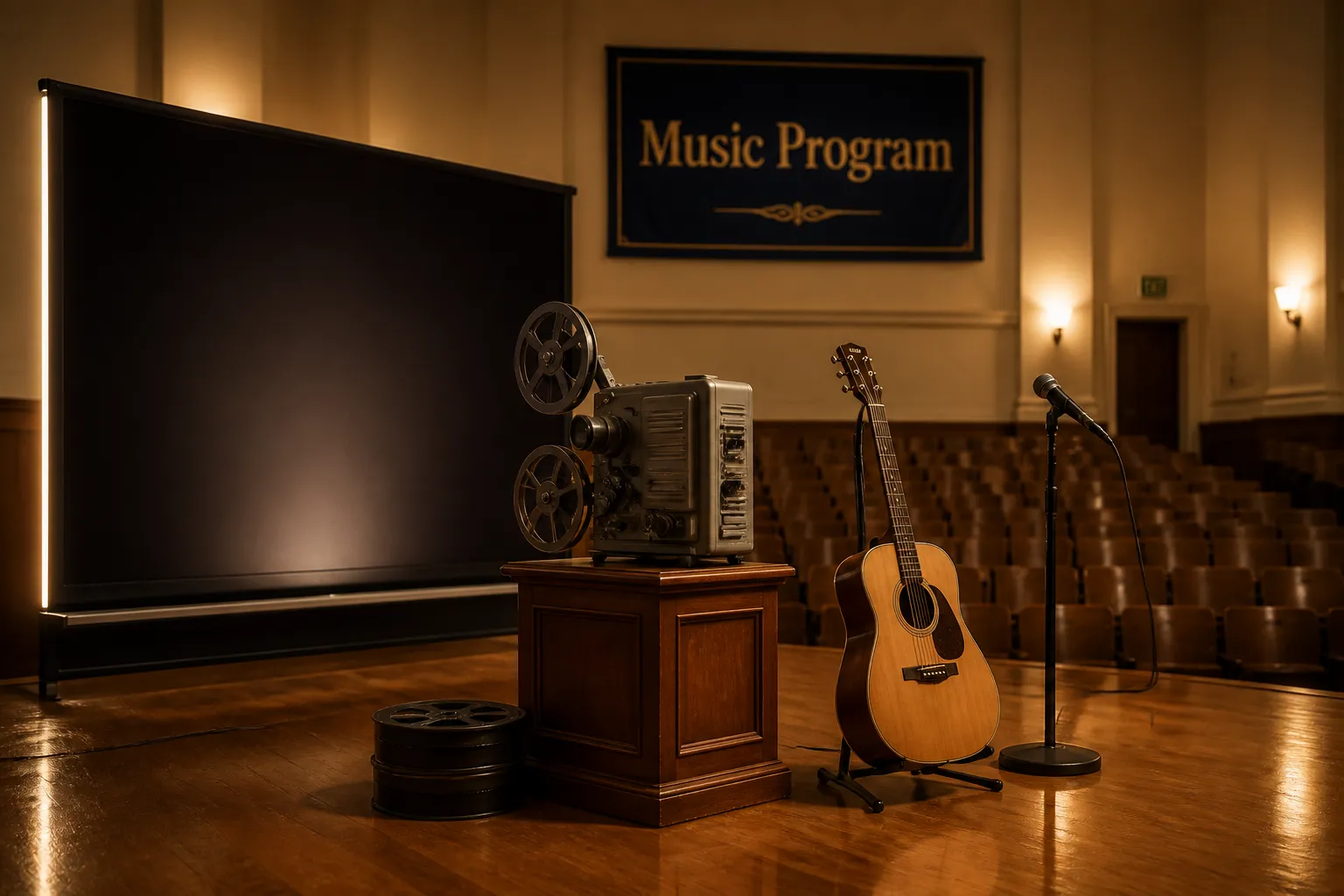
On May 13, 2026, the Massachusetts Institute of Technology’s newly launched Music Technology and Computation (MTC) Graduate Program held its first research showcase in the Thomas Tull Concert Hall of the freshly completed Edward and Joyce Linde Music Building. The packed venue—filled to standing‑room capacity—witnessed a blend of academic talks and live performances that spanned EEG‑based music decoding, real‑time AI improvisation visualization, and movement‑driven hip‑hop composition.
The event marked the culmination of a program that began in fall 2024 as a joint effort between the School of Humanities, Arts, and Social Sciences (SHASS) and the School of Engineering (SoE). Five former MIT undergraduates now graduate students, together with PhD researchers and faculty, filled a 90‑minute slot with presentations that showcased the interdisciplinary nature of the curriculum. Highlights included an AI co‑improvising agent that projected its internal states, a sound‑art installation reacting to noisy network traffic, a dance circle that translates hip‑hop moves into music, and a pioneering study that reads imagined tunes from electroencephalogram (EEG) signals.
The showcase opened with remarks from SHASS Dean Agustín Rayo, SoE Dean Paula Hammond, and MTC Director Eran Egozy. Rayo stated the program’s ambition is "to lead the world in music technology theory and application," adding that it "is not just about making music with technology; it’s also about working across disciplines to help better shape the future of expression in an AI‑driven world." He noted the support of the new music building, inaugurated in 2025, and the Schwarzman College of Computing. Hammond emphasized the shared roots of music and engineering, describing MIT’s role in bringing "the top technologists and the top musicians together to create unique opportunities for collaboration." Egozy called the event a "harmonious hybrid of concert and symposium" and highlighted the cohort’s rapid progress as evidence that a one‑year master’s program is viable.
Student projects underscored the program’s cross‑disciplinary focus. Claire Southard ’25, SM ’26, presented a machine‑learning model that decodes musical notes from EEG signals. She explained that her work "explores one strategy to help such musicians perform again by translating the music they’re trying to play directly from their brain activity—bypassing the need for motor control altogether," aiming to offer a more accessible future for musicians with movement disorders. Mariano Salcedo ’25, SM ’26, showcased a custom web application that generates emergent visuals driven by real‑time music streams. He described the system as "using algorithms inspired by self‑organized systems" to create aesthetically synergistic visuals, and stressed the importance of human‑centered technology: "we don’t only just ask what we can build, but we also ask who it is going to affect, who is not going to affect, and who does it benefit."
Associate Professor Anna Huang, a joint faculty member of the Music and Theater Arts Section and the Department of Electrical Engineering and Computer Science, delivered a keynote on human‑AI interaction in music. She highlighted an upcoming course that will combine improvisation, somatics, and AI, and described the program’s co‑design approach: "We work with these musicians, we go into the studio, and every week we try something. And the technology grows with the creative process." The showcase also featured work by Quanta Fellows, including visualizing internal states of music models, modeling noisy communication, generative music for social choreography, and a whale‑cello dialogue with a diffusion model.
Looking ahead, MTC admitted 10 master’s students for the 2026‑27 academic year from more than 100 applicants, expanding beyond MIT alumni to include graduates of other institutions. The leadership emphasizes the diversity of backgrounds and a shared passion for augmenting music through technology. The inaugural showcase demonstrates that MIT’s Music Technology and Computation Graduate Program is actively producing research at the intersection of music, engineering, and computation.
The event confirms that MIT is cultivating a vibrant, multidisciplinary community that attracts students with varied career objectives. As the program expands its cohort and continues to publish research, MIT will likely host additional showcases and contribute further findings to the broader field of music technology. No major announcements about funding or partnerships were made during the event.
The event marked the culmination of a program that began in fall 2024 as a joint effort between the School of Humanities, Arts, and Social Sciences (SHASS) and the School of Engineering (SoE). Five former MIT undergraduates now graduate students, together with PhD researchers and faculty, filled a 90‑minute slot with presentations that showcased the interdisciplinary nature of the curriculum. Highlights included an AI co‑improvising agent that projected its internal states, a sound‑art installation reacting to noisy network traffic, a dance circle that translates hip‑hop moves into music, and a pioneering study that reads imagined tunes from electroencephalogram (EEG) signals.
The showcase opened with remarks from SHASS Dean Agustín Rayo, SoE Dean Paula Hammond, and MTC Director Eran Egozy. Rayo stated the program’s ambition is "to lead the world in music technology theory and application," adding that it "is not just about making music with technology; it’s also about working across disciplines to help better shape the future of expression in an AI‑driven world." He noted the support of the new music building, inaugurated in 2025, and the Schwarzman College of Computing. Hammond emphasized the shared roots of music and engineering, describing MIT’s role in bringing "the top technologists and the top musicians together to create unique opportunities for collaboration." Egozy called the event a "harmonious hybrid of concert and symposium" and highlighted the cohort’s rapid progress as evidence that a one‑year master’s program is viable.
Student projects underscored the program’s cross‑disciplinary focus. Claire Southard ’25, SM ’26, presented a machine‑learning model that decodes musical notes from EEG signals. She explained that her work "explores one strategy to help such musicians perform again by translating the music they’re trying to play directly from their brain activity—bypassing the need for motor control altogether," aiming to offer a more accessible future for musicians with movement disorders. Mariano Salcedo ’25, SM ’26, showcased a custom web application that generates emergent visuals driven by real‑time music streams. He described the system as "using algorithms inspired by self‑organized systems" to create aesthetically synergistic visuals, and stressed the importance of human‑centered technology: "we don’t only just ask what we can build, but we also ask who it is going to affect, who is not going to affect, and who does it benefit."
Associate Professor Anna Huang, a joint faculty member of the Music and Theater Arts Section and the Department of Electrical Engineering and Computer Science, delivered a keynote on human‑AI interaction in music. She highlighted an upcoming course that will combine improvisation, somatics, and AI, and described the program’s co‑design approach: "We work with these musicians, we go into the studio, and every week we try something. And the technology grows with the creative process." The showcase also featured work by Quanta Fellows, including visualizing internal states of music models, modeling noisy communication, generative music for social choreography, and a whale‑cello dialogue with a diffusion model.
Looking ahead, MTC admitted 10 master’s students for the 2026‑27 academic year from more than 100 applicants, expanding beyond MIT alumni to include graduates of other institutions. The leadership emphasizes the diversity of backgrounds and a shared passion for augmenting music through technology. The inaugural showcase demonstrates that MIT’s Music Technology and Computation Graduate Program is actively producing research at the intersection of music, engineering, and computation.
The event confirms that MIT is cultivating a vibrant, multidisciplinary community that attracts students with varied career objectives. As the program expands its cohort and continues to publish research, MIT will likely host additional showcases and contribute further findings to the broader field of music technology. No major announcements about funding or partnerships were made during the event.